Architectural Photographer in Phoenix: A Twilight Shoot
It was over 100 degrees at 6 p.m. and I was standing in the shade, which did almost nothing.
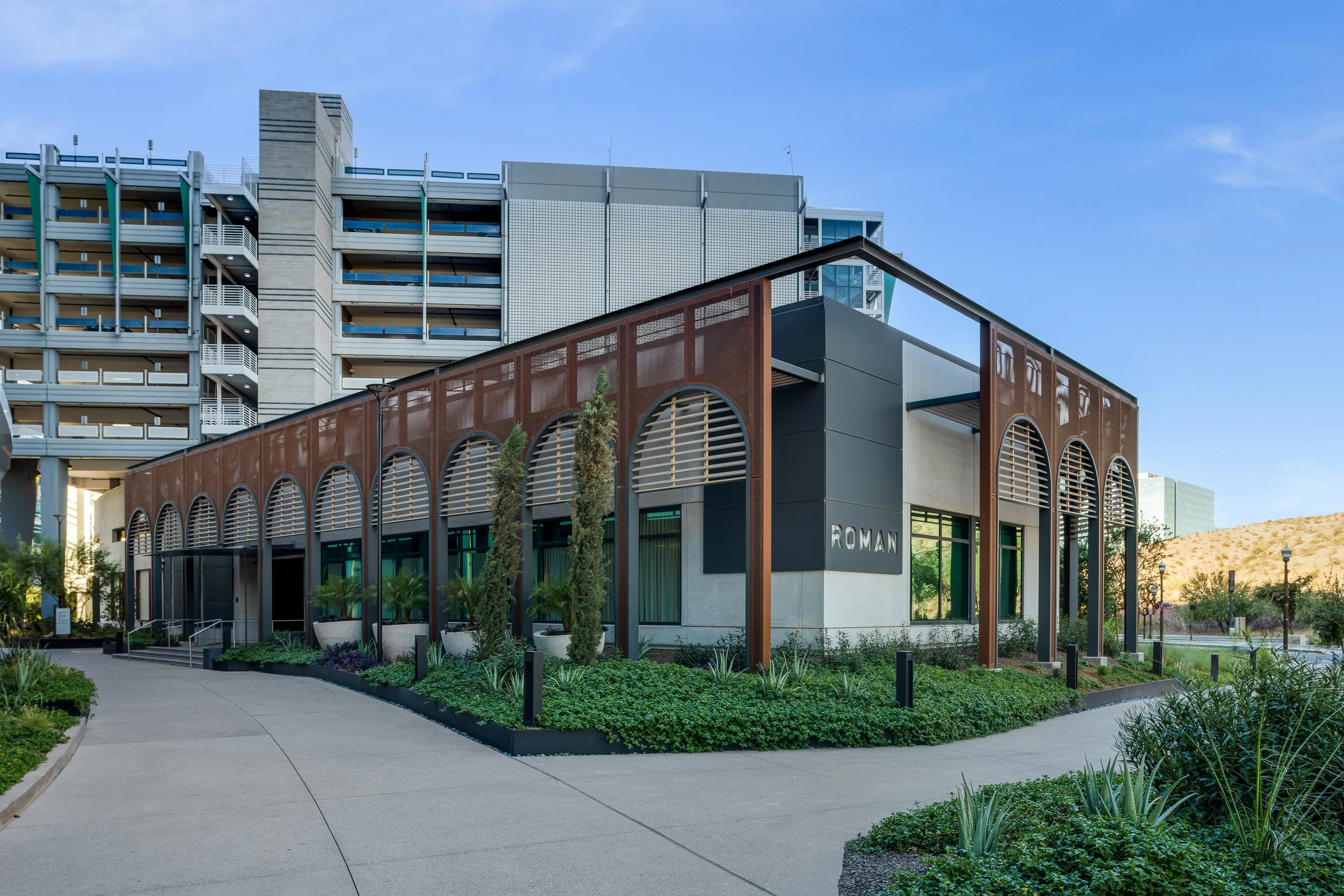
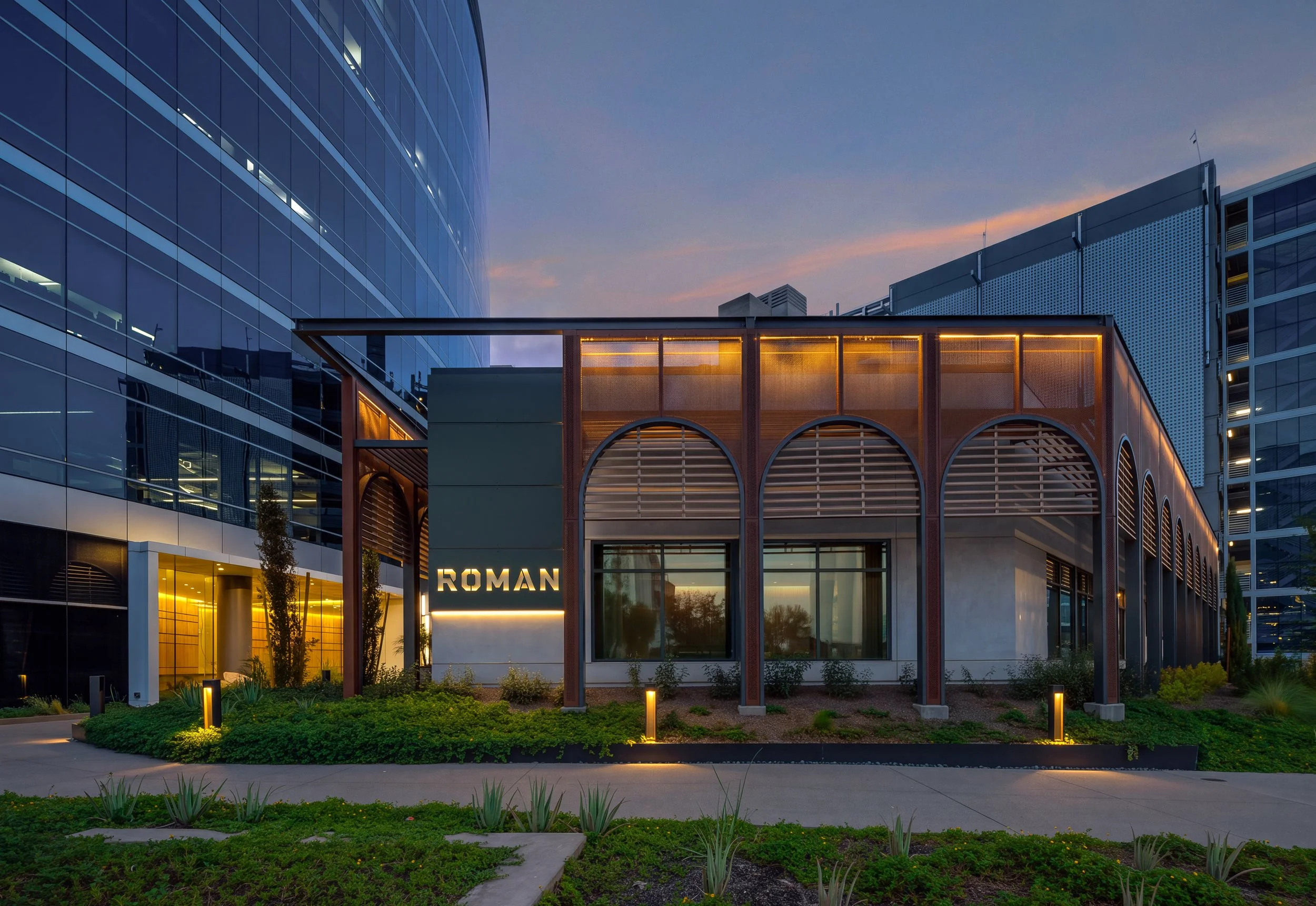
That was Roman God of Fire in Tempe, a new restaurant on the Hayden Ferry Lakeside waterfront built by Layton Construction. The sun had already dropped behind the parking structure next door so I wasn't in direct light. The pavement was still radiating. My gear was hot to the touch. And I had about 90 minutes before the sky did the thing I came for.
That window is the whole job. Everything else bends around it.
As an architectural photographer in Phoenix, I schedule around light, not around the workday. On this one that meant getting on site at 5:30 p.m. in 105-degree heat for the daylight exteriors, then staying through sunset to shoot the same building lit. The client got both out of one visit.
What architectural photography in Phoenix involves
Is there a real difference between architectural photography and the property photos you scroll past on a listing site? Yes, and it comes down to who the images are for.
Property photos exist to move a space. Shot fast, shot wide, shot bright, done. The photos I make represent the people who built the thing, and they end up in award submissions, press features, pitch decks, and firm websites. The architect, the GC, and the developer all have a stake in how the building reads, so I'm shooting for three or four audiences at once.
That changes the work. Verticals stay vertical. I build compositions around the moves the design team made, whether that's a material transition, a structural rhythm, or the way a canopy meets a facade. I shoot around 50 commercial projects a year and almost none of them are one and done.
It also changes what happens after I leave. Award programs have image specs, and a firm submitting to AIA Arizona or ENR is working backward from a deadline that does not move. A photo can look great on Instagram and still get a submission kicked.
Why twilight is worth building a schedule around
Here's why I put the whole day around dusk.
During daylight, the light outside a building crushes the light inside it. Windows go dark or blow out. Signage disappears. Whatever the lighting designer spent months on, invisible.
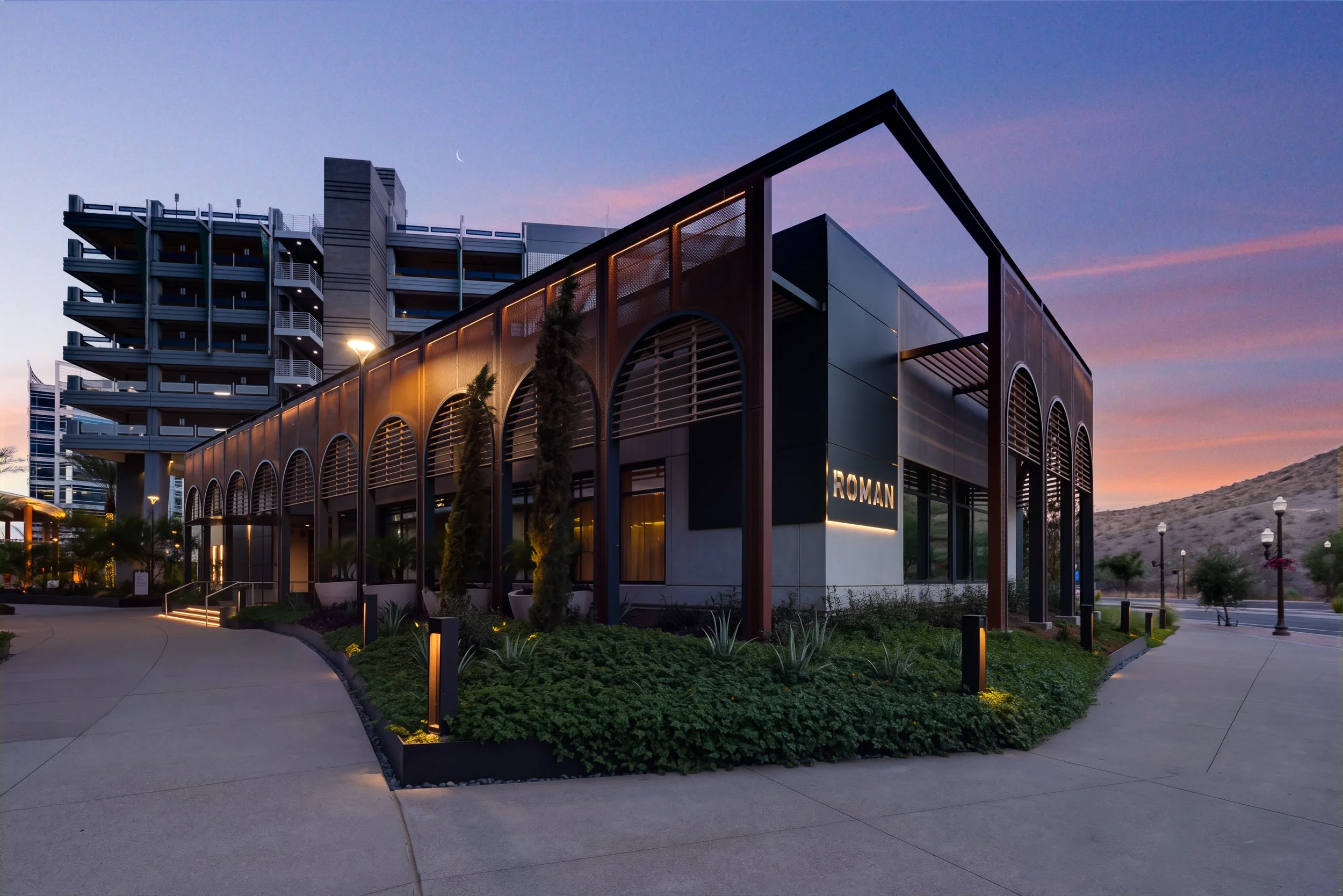
At dusk that gap closes. Interior lighting, accent lighting, landscape uplighting, and illuminated signage all come forward while there's still color in the sky. At Roman, that's when the steel arcade stopped being a row of arches and started reading as a lit colonnade, and when the ROMAN signage looked like signage instead of a dark rectangle.
The catch is the window is short. Twenty to forty minutes depending on the season, and if I miss it I'm driving back tomorrow.
If a building has a lighting design, dusk is the only time your photos will prove it.
How I sequenced the Roman shoot
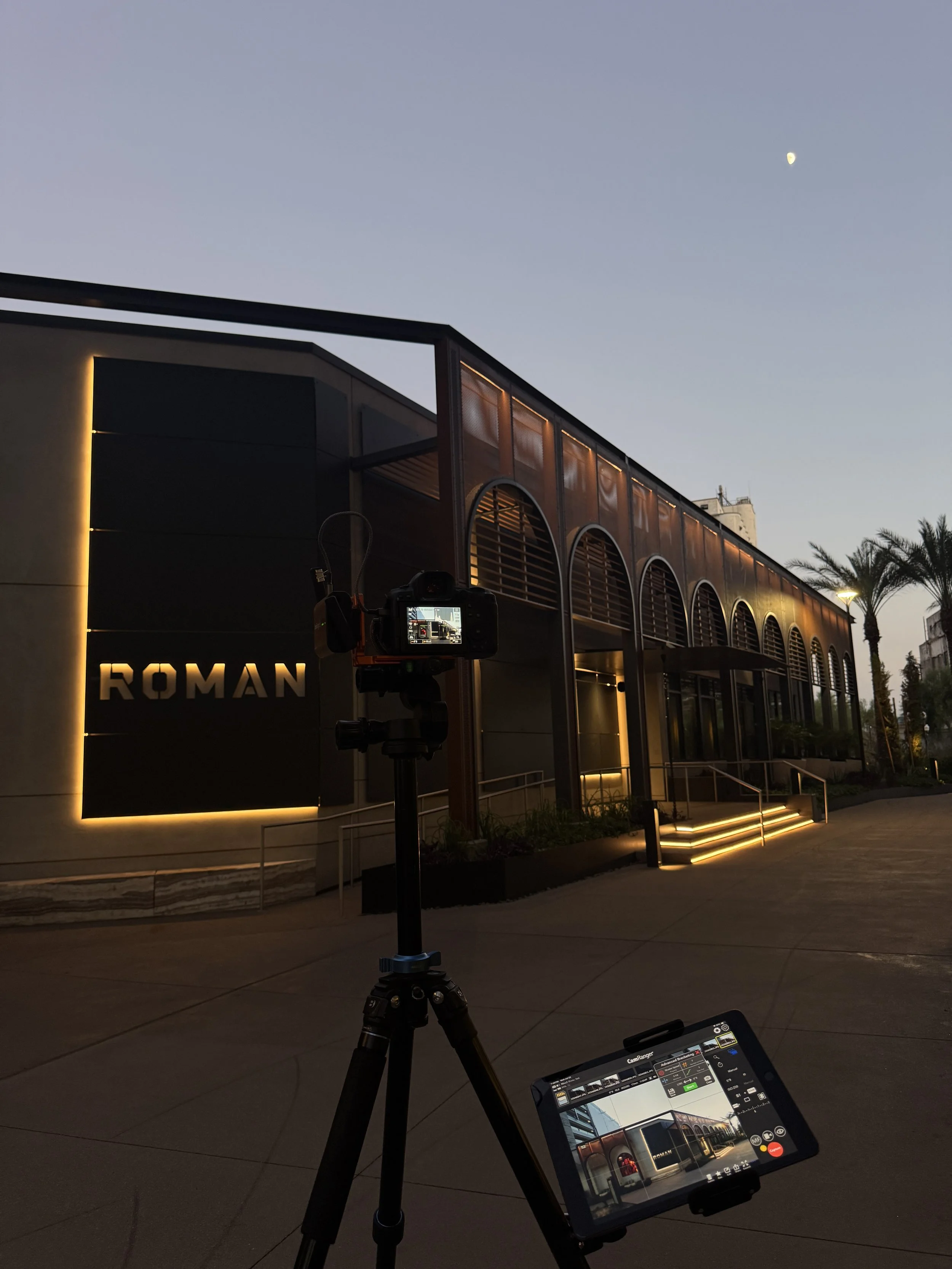
I got on site at 5:30, way before the light I came for. On purpose.
Daylight and dusk give you two different buildings, and clients use them differently. Daylight exteriors show material, color, and how the thing sits in its context. Dusk exteriors show atmosphere and lighting. A GC might want daylight for the project page and dusk for the award submission, or the other way around, and I'd rather hand over both than guess.
So the sequence went like this. Get there early, scout, lock every composition while there's plenty of light. Shoot the daylight set. Then hold those exact positions and reshoot as the sun drops. Same angles, two completely different moods, one site visit.
Working that way means I'm not scrambling when the good light shows up. By the time the sky went purple, every frame was already composed and I was just running the sequence.
The heat is the part nobody puts on the schedule. Per the National Weather Service, every single day in June 2026 hit 100 degrees or higher in Phoenix, seven of them at 110 or above, with an average high of 106.9. Booking a 5:30 call time in that is a whole decision.
What to look for when hiring an architectural photographer in Phoenix
Four things I'd ask before booking anyone, me included.
Do they shoot twilight, and is it extra? Ask whether dusk is included or billed on top. If your project has exterior lighting or lit signage, I'd get that answered before you talk about anything else.
How do they handle licensing? Commercial jobs come with a pile of partners who all want to use the images, and if the architect, the GC, and the developer each negotiate on their own, that's three invoices and three sets of terms for the same job. I run cost-share licensing, so it splits across partners at booking instead of dragging out for months afterward.
What's the delivery window, and is it in writing? This is the one I'd push hardest on. My packages run on 5, 10, and 14 business-day windows depending on tier, with a $300 on-time guarantee attached, so if I miss it, I pay you. Award deadlines don't move, so the handoff date carries as much weight as the photos.
Have they shot your building type? Hospitality, multifamily, healthcare, and office all photograph differently. A restaurant needs atmosphere, and a medical facility needs clarity with people in the frame most of the time.
When to book, and how far out
Chasing an award submission? Then the entry deadline runs your whole schedule, and we build backward from it. Subtract your internal review time, subtract my delivery window, subtract the shoot itself, and wherever you land is the day you need me booked.
AIA Arizona's early bird lands mid-July, AIA California closes in late March, and ENR Best Projects runs its own spring cycle. Whichever one you're going for, that entry date is what everything hangs off.
If there's no award in play, the math is the same. A press feature, a website refresh, a pitch that's already scheduled, they all come with a deadline attached, and that's what sets your booking date.
For a summer shoot in the Phoenix metro, book earlier than feels necessary. The usable light each evening is short, monsoon season can erase a scheduled night with no warning, and there are only so many dusk slots in a week, since each one gets you exactly one building. So yeah, book early.
Getting your Phoenix project on the schedule
Got a project in Phoenix, Tempe, Scottsdale, or Tucson that needs images for an award submission, a press feature, or your firm's site? Send me the completion date and the deadline you're working toward and I'll tell you what's realistic.
PROJECT PARTNERS
Client: Layton Construction
Architect: tvs design
Location: Tempe, Arizona
Photography: Haley Hill Photography, your go-to architectural and interior photographer
FAQ
What does an architectural photographer in Phoenix charge?
It depends on scope, image count, and how many project partners need licensing. My pricing is published in fixed packages instead of quoted case by case, so you can budget before you ever inquire. Cost-share licensing across partner firms usually brings the per-firm number down a lot.
Why do architectural photographers shoot at twilight?
At dusk, interior and exterior light levels are close enough that both show up correctly in one frame. During daylight, exterior light overwhelms interior lighting and illuminated signage, so any lighting design in the project goes invisible in the photos.
How long does a commercial photo shoot take?
An exterior shoot built around twilight usually runs two to three hours on site, starting well before the light window so every composition is locked in advance. Add interiors and you're looking at a full day or more.
Can multiple firms use the same photos?
Yes, with the right licensing. Every partner firm on the project can hold usage rights from a single shoot, which costs way less than each of them commissioning their own photographer or buying rights after the fact.
Do you travel outside Phoenix?
Yes. I shoot across Arizona including Phoenix, Scottsdale, Tempe, and Tucson, plus San Diego and the Bay Area in California.
How far in advance should I book a Phoenix shoot?
Start at the submission date and count backward through every step that has to happen first. For summer twilight shoots in the Phoenix metro, leave extra room for monsoon weather, which can wipe out an evening with almost no notice.